

yuansensetech
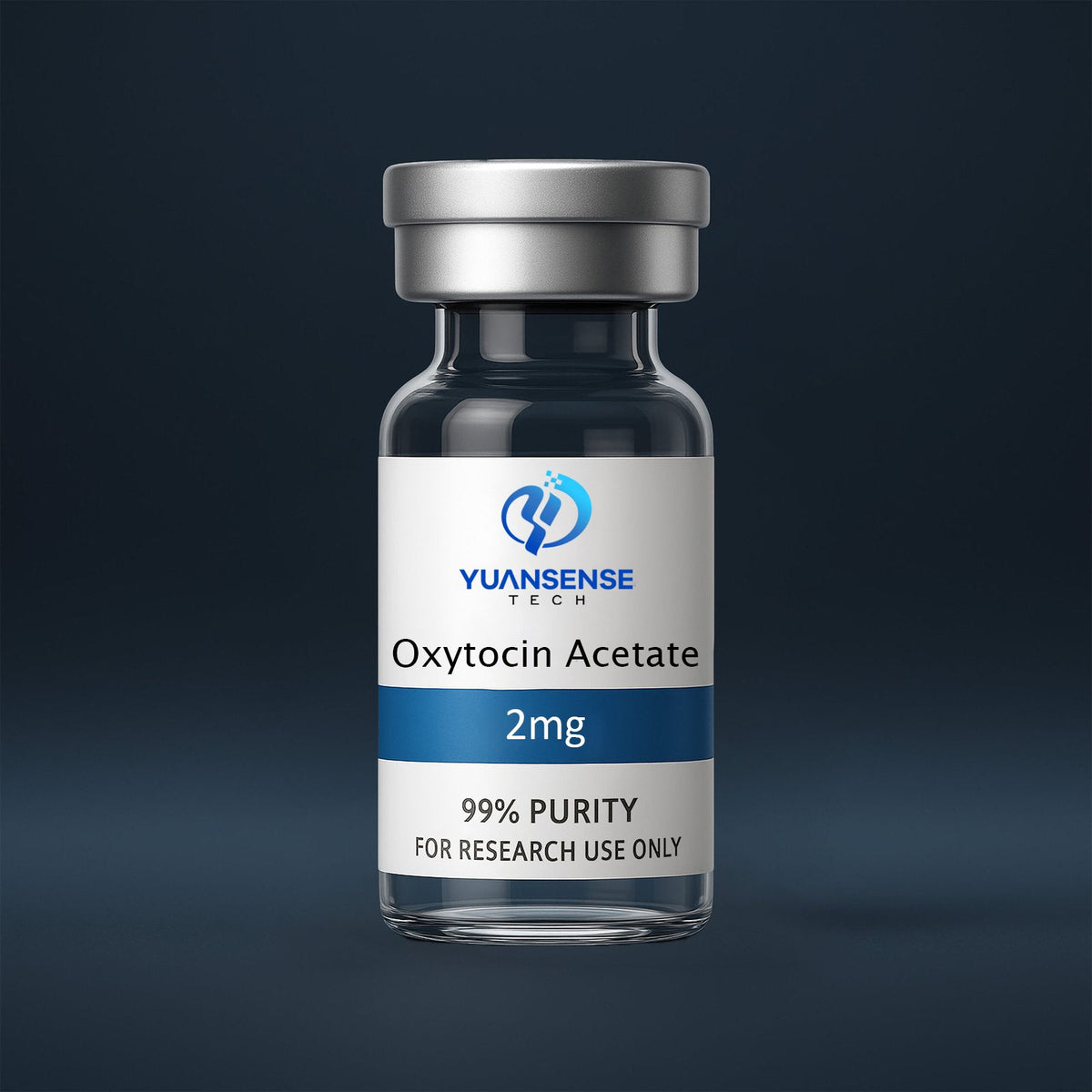
Oxytocin Acetate
Oxytocin Acetate
SKU:
Couldn't load pickup availability
Product Description
Overview
Oxytocin Acetate is a synthetic peptide research material supplied by Yuansense Peptide for laboratory and professional research applications.
Oxytocin is a naturally occurring nonapeptide hormone composed of nine amino acids. Synthetic Oxytocin Acetate is widely used as a reference material in peptide chemistry, analytical research, molecular interaction studies, and biochemical research.
Oxytocin Acetate is supplied in acetate salt form to improve product stability and handling characteristics. Yuansense Peptide provides high-purity peptide material with supporting quality documentation, including Certificate of Analysis (COA), HPLC testing, and analytical verification records.
Flexible supply options are available for research institutions, distributors, and professional buyers, including sample orders and bulk peptide supply programs.
Product Information
| CAS Number: | 50-56-6 (Oxytocin); acetate salt form may vary by supplier specification |
| PubChem CID: | 439302 |
| Molecular Formula: | C43H66N12O12S2 (Oxytocin base) |
| Molecular Weight: | 1007.19 g/mol (Oxytocin base) |
| Purity: | ≥98.6% (Actual batch purity may vary according to production testing results) |
| Sequence: | CYIQNCPLG-NH₂ |
| Form: | Lyophilized powder (Acetate Salt) |
| Storage: | Store at -20°C or below for long-term storage, protected from light and moisture. Storage conditions may vary depending on product characteristics, handling procedures, and specific experimental requirements. |
| Solubility: | Soluble in water or suitable laboratory buffers. Actual solubility may vary depending on concentration, solvent selection, temperature, and laboratory conditions. |
Technical Specifications
| Peptide Type: | Synthetic Nonapeptide |
| Peptide Length: | 9 Amino Acids |
| Sequence: | Cys-Tyr-Ile-Gln-Asn-Cys-Pro-Leu-Gly-NH₂ |
| Salt Form: | Acetate Salt |
| Appearance: | White Lyophilized Powder |
| Purity: | ≥98.6% (Actual batch purity may vary according to production testing results) |
| Testing Method: | HPLC / Mass Spectrometry |
| Documentation: | Certificate of Analysis (COA), HPLC Testing Report, Mass Spectrometry Data |
Research Applications
- Peptide Chemistry Research: Used as a reference material for synthetic peptide analysis and characterization.
- Molecular Interaction Studies: Applied in laboratory studies involving peptide-receptor interactions and biochemical mechanisms.
- Analytical Research: Used for peptide identification, purity testing, and structural confirmation.
- Peptide Synthesis Research: Suitable for studies involving disulfide-containing peptide structures.
Quality Control & Documentation
Each batch of Oxytocin Acetate supplied by Yuansense Peptide undergoes quality verification procedures to ensure product consistency and documentation reliability.
- Certificate of Analysis (COA)
- HPLC Purity Testing Report
- Mass Spectrometry Testing Data
- Batch Quality Documentation
Customers may contact our team to request the latest batch documentation.
Packaging & Bulk Supply
Yuansense Peptide provides flexible supply options for Oxytocin Acetate peptide research material.
- Sample orders for laboratory evaluation
- Multiple vial specifications available
- Bulk peptide supply programs
- Distributor cooperation
- Customized packaging solutions
For larger quantity requirements, please contact our sales team for bulk pricing and supply availability.
Frequently Asked Questions
What is Oxytocin Acetate peptide?
Oxytocin Acetate is a synthetic nonapeptide research material supplied in acetate salt form for laboratory peptide studies.
What is the sequence of Oxytocin?
The oxytocin peptide sequence is CYIQNCPLG-NH₂.
What is the molecular weight of Oxytocin?
The molecular weight of oxytocin base is approximately 1007.19 g/mol.
Do you provide COA for Oxytocin Acetate?
Yes. Certificate of Analysis (COA), HPLC reports, and mass spectrometry documentation are available upon request.
Can I order bulk Oxytocin Acetate?
Yes. Yuansense Peptide supports sample orders and bulk peptide supply programs. Larger quantity buyers can contact our sales team for pricing and availability.
Disclaimer
This product is supplied for research use only (RUO).
It is not intended for human consumption, medical use, diagnosis, treatment, or prevention of any disease.
Important Notice
This product is sold strictly for laboratory research purposes only.It is not intended for human consumption, medical use, or clinical application. By purchasing this product, the buyer confirms that it will be used solely for lawful scientific research.
Research Use Only
This product is intended for research purposes only and is not for human consumption, therapeutic use, or diagnostic applications. Please ensure compliance with all applicable regulations and institutional guidelines.